Haliya: Where Traditional Arabic Calligraphy Meets Contemporary Design
In the ever-evolving world of graphic design, typography serves as more than just a vehicle for text; it is the voice of a brand, the mood of an article, and the soul of a visual identity. Among the many typefaces that have emerged to capture the essence of culture, Haliya stands out as a remarkable fusion of ancient artistry and modern utility. Designed to bring the beauty of traditional Arabic calligraphy into the digital age, Haliya offers designers a unique tool to express elegance, heritage, and sophistication in their work.
Whether you are a seasoned typographer or a creative beginner looking to understand the nuances of cultural design, exploring Haliya provides a fascinating window into how historical aesthetics can be revitalized for today's audiences. This article delves into the origins, characteristics, and practical applications of this elegant font, helping you understand why it has become a staple for luxury branding, editorial projects, and Islamic-themed campaigns.
The Essence of Haliya: A Tribute to Middle Eastern Aesthetics
To truly appreciate Haliya, one must first understand the rich tapestry of Arabic calligraphy from which it draws inspiration. For centuries, Arabic script has been revered not merely as a method of communication but as a high form of visual art. From the intricate patterns of mosque domes to the delicate lines of Quranic manuscripts, the fluidity and geometry of Arabic letters have defined Middle Eastern aesthetics.
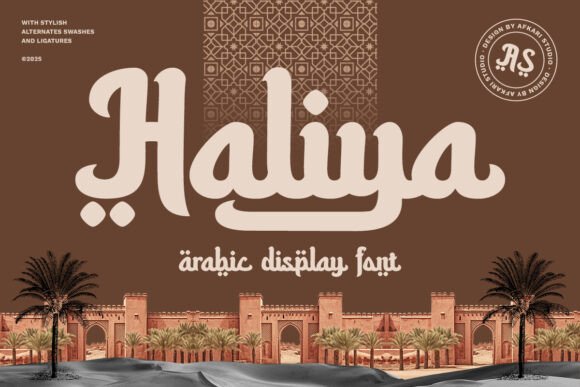
Haliya captures this spirit by combining authentic Arabic letterforms with a contemporary touch. It does not simply replicate old manuscripts; instead, it interprets them for the screen and the print press of the 21st century. The font features fluid curves, graceful strokes, and intricate details that mimic the movement of a traditional reed pen (qalam) while maintaining the legibility required for modern interfaces.
This balance is crucial. Many fonts attempt to look "Arabic" but fail because they prioritize decoration over readability. Haliya succeeds by respecting the structural integrity of the script while enhancing its visual appeal. It is a typeface that whispers history while speaking clearly to the present day.
Key Characteristics That Define the Style
What makes Haliya distinct from other display fonts? Several key design elements contribute to its unique character:
- Fluid Curves: The backbone of Haliya is its organic flow. Unlike rigid geometric sans-serifs, Haliya mimics the natural hand of a calligrapher, creating a sense of movement and grace.
- Graceful Strokes: The variation in stroke width adds depth and dimension. Thick downstrokes contrast beautifully with thin upstrokes, echoing the pressure applied by a traditional pen.
- Intricate Details: Subtle flourishes and terminals add a layer of sophistication without overwhelming the viewer. These details invite closer inspection, rewarding the audience with artistic nuance.
- Cultural Authenticity: Every curve and angle is informed by traditional rules of Arabic script, ensuring that the font feels genuine rather than like a superficial imitation.
Practical Applications: Bringing Haliya to Life
The versatility of Haliya extends far beyond decorative headers. Its design philosophy allows it to function effectively across a wide range of mediums and industries. By understanding where and how to use this typeface, designers can elevate their projects from good to exceptional.
Luxury Branding and Identity
In the realm of branding, perception is everything. Luxury brands often seek to convey exclusivity, heritage, and quality. Haliya is perfectly suited for this purpose. Imagine a logo for a high-end perfume line inspired by Arabian nights, or a boutique hotel chain located in Dubai. Using Haliya immediately signals a connection to tradition and craftsmanship.
The font's elegant structure allows it to stand alone as a logotype or pair beautifully with minimalist sans-serif fonts for body copy. This contrast creates a sophisticated hierarchy that guides the viewer's eye while reinforcing the brand's premium status.
Editorial Design and Publishing
For magazines, books, and online publications focusing on culture, history, or lifestyle, Haliya offers a compelling typographic solution. It is particularly effective for headlines, pull quotes, and chapter titles. In an era of digital fatigue, the human touch inherent in Haliya's design helps content feel more personal and engaging.
Consider a feature article on Middle Eastern cuisine or a travel guide to Morocco. Using Haliya for the title immerses the reader in the subject matter before they even read the first sentence. It sets the tone and establishes context instantly.
Packaging and Product Design
Packaging is the silent salesman of any product. For halal products, gourmet foods, cosmetics, and artisanal goods, the packaging must communicate purity and authenticity. Haliya adds a layer of prestige to product labels. Whether it is a jar of dates, a bottle of rose water, or a box of traditional sweets, the font suggests that the contents inside are crafted with care and respect for tradition.
Moreover, the font scales well, meaning it looks impressive on both small cosmetic tubes and large shipping boxes. Its intricate details remain visible at various sizes, ensuring the brand message is clear regardless of the format.
Celebrating Culture: Ramadan and Islamic-Themed Projects
One of the most significant use cases for Haliya is in religious and cultural celebrations, particularly during Ramadan. As the holy month approaches, businesses and organizations ramp up their marketing efforts with special campaigns, invitations, and social media graphics. During this time, the demand for typography that reflects Islamic values and aesthetics skyrockets.
Haliya is ideal for Ramadan campaigns because it embodies the spiritual and artistic traditions of the faith. It can be used to create stunning greeting cards, event posters for Iftar gatherings, and promotional materials for mosques or community centers. The font's graceful nature aligns perfectly with the themes of peace, reflection, and community that define the season.
Beyond Ramadan, Haliya serves as a powerful tool for year-round Islamic-themed projects. From educational materials teaching the alphabet to designs for Islamic fashion brands, the font bridges the gap between religious devotion and modern creativity. It allows designers to honor their heritage while participating fully in the global design conversation.
Common Misunderstandings About Arabic Typefaces
Despite the growing appreciation for diverse typography, there are still common misconceptions regarding Arabic-style fonts. Addressing these misunderstandings is essential for anyone looking to use Haliya effectively.
- "It's Just Decorative": Many assume that ornate Arabic fonts are purely decorative and cannot be used for functional text. While Haliya is indeed beautiful, its design prioritizes legibility. When used correctly for headings and short phrases, it communicates information clearly while adding aesthetic value.
- "All Arabic Fonts Look the Same": There is immense diversity within Arabic calligraphy. Haliya represents a specific style—elegant and fluid—that differs significantly from bold Kufic scripts or handwritten Naskh styles. Recognizing these differences allows for more precise and meaningful design choices.
- "It's Only for Religious Contexts": While deeply rooted in Islamic tradition, Haliya is not limited to religious use. Its universal appeal to elegance and luxury makes it suitable for secular brands, wedding invitations, and artistic projects that wish to evoke a sense of timeless beauty.
Elevating Your Creative Workflow
Integrating Haliya into your design workflow requires a thoughtful approach. Like any powerful tool, it should be used with intention. Start by considering the emotional impact you want to achieve. Do you want to convey warmth, authority, or mystery? Haliya leans towards warmth and sophistication, making it a perfect choice for projects that require a human touch.
Experiment with pairing Haliya with different color palettes. Gold, deep emerald green, and rich burgundy often complement the font's curves beautifully, evoking the opulence of Middle Eastern palaces. However, do not be afraid to try it against stark black and white backgrounds for a more modern, high-contrast look.
Furthermore, consider the medium. On digital screens, ensure that the font size is large enough to render the intricate details clearly. In print, take advantage of high-resolution capabilities to showcase the fine strokes and subtle variations in thickness.
Conclusion: A Bridge Between Past and Future
Haliya is more than just a collection of characters; it is a testament to the enduring power of cultural heritage in the digital age. By blending the fluid curves and intricate details of traditional Arabic calligraphy with the demands of modern design, it offers a unique solution for creators seeking to tell stories with depth and elegance.
From luxury branding and editorial layouts to Ramadan campaigns and halal product packaging, Haliya empowers designers to create work that resonates on a deeper level. It invites viewers to pause, appreciate the beauty of the script, and connect with the rich history it represents.
As we continue to navigate a globalized world, tools like Haliya remind us that innovation does not mean abandoning tradition. Instead, it means finding new ways to celebrate it. Whether you are crafting a logo, designing a social media graphic, or creating an invitation card, Haliya adds a sophisticated and artistic feel that elevates your work. Embrace the fusion of Arabic heritage and contemporary creativity, and let your designs speak with the grace and beauty of Haliya.
Download Haliya Font to start transforming your next project today.