Thick Spirit: A Bold Typography Solution for the Modern Creative Economy
In an era where digital attention is the most scarce commodity, the visual language of a brand often determines its first and lasting impression. Designers, marketers, and entrepreneurs are constantly seeking tools that can cut through the noise, offering not just legibility but personality. Enter Thick Spirit, a captivating display font that has rapidly gained traction among forward-thinking creatives. More than a mere collection of characters, Thick Spirit represents a shift in typographic trends toward fonts that embody whimsy, strength, and emotional resonance simultaneously.
As we navigate a landscape saturated with minimalist sans-serifs and rigid geometric forms, there is a growing hunger for typography that feels human, spirited, and alive. Thick Spirit answers this call with a design philosophy rooted in joy and vibrancy, making it an essential asset for professionals looking to infuse their projects with a burst of bright energy.
The Essence of Thick Spirit: Beyond Standard Display Fonts
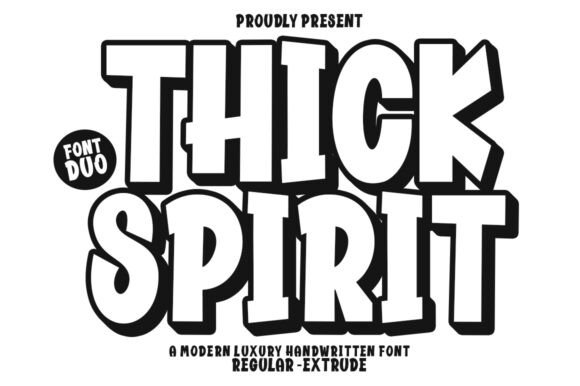
To understand why Thick Spirit is resonating so deeply with the creative community, one must first look at its fundamental character. It is a display font designed with a distinct, slightly quirky aesthetic that refuses to be ignored. Unlike traditional typefaces that prioritize uniformity above all else, Thick Spirit embraces irregularity as a feature, not a bug. Its strokes are robust yet playful, creating a visual rhythm that mimics the spontaneity of hand-drawn art while maintaining the structural integrity required for professional application.
The name itself hints at the font's dual nature: "Thick" suggests weight, presence, and authority, while "Spirit" implies movement, life, and emotion. This combination allows designers to create headlines and logos that command attention without feeling aggressive. Instead, they invite the viewer in with a sense of delightful charm. Whether used for a children's book cover, a boutique coffee shop logo, or a vibrant marketing campaign, Thick Spirit brings a fresh vibrancy that elevates the entire composition.
What truly sets this typeface apart in a crowded market is its technical sophistication. Notably, Thick Spirit comes PUA coded. For those unfamiliar with the term, Private Use Area (PUA) coding refers to a specific section of the Unicode standard reserved for custom characters. In the context of this font, it means you will have effortless access to an incredible array of glyphs and ligatures that go far beyond the standard alphabet. This technical feature adds a new level of depth and dimension to its functionality, allowing for intricate customization that standard fonts simply cannot offer.
Unlocking Creative Potential Through PUA Coding
The inclusion of PUA coding in Thick Spirit is not merely a technical specification; it is a gateway to unparalleled design possibilities. In modern workflows, speed and flexibility are paramount. Designers often find themselves limited by the rigid constraints of standard character sets, forcing them to manually draw decorative elements or search for multiple fonts to achieve a cohesive look. Thick Spirit solves this problem by embedding a vast library of stylistic alternatives directly into the font file.
Imagine crafting a headline where every letter connects seamlessly with unique ligatures, or adding whimsical flourishes and alternative glyphs with a single keystroke. This capability transforms the font from a static tool into a dynamic creative partner. For freelancers and agencies working under tight deadlines, this efficiency is invaluable. It streamlines the workflow, reducing the time spent on vector manipulation and allowing more focus on strategic creativity. The ability to access these hidden gems effortlessly ensures that no two designs using Thick Spirit need ever look exactly the same, fostering a unique visual identity for every client project.
Aligning with Broader Industry Trends
The rise of Thick Spirit does not happen in a vacuum; it mirrors significant shifts occurring across the design, marketing, and consumer technology sectors. We are witnessing a broader movement away from sterile, corporate aesthetics toward brands that feel authentic, approachable, and emotionally intelligent. Consumers today, particularly younger demographics like Gen Z and Millennials, crave experiences that feel personal and genuine. They are drawn to brands that show personality and aren't afraid to be a little weird or whimsical.
In the realm of lifestyle and consumer trends, there is a palpable desire for "joyful design." As the world becomes increasingly complex and stressful, visual content that offers a moment of delight stands out. Thick Spirit fits perfectly into this narrative. Its quirky character acts as a visual breath of fresh air, capable of turning a mundane advertisement into a memorable experience. This aligns with the current preference for storytelling over selling, where the tone of communication is just as important as the message itself.
Furthermore, the technology sector is seeing a resurgence of retro-futurism and neo-brutalism, styles that often rely on bold, expressive typography. Thick Spirit bridges the gap between these edgy trends and the need for warmth. It provides the boldness required for high-impact digital interfaces while retaining the softness necessary for building trust and connection. This versatility makes it relevant not just for print media, but for mobile apps, social media graphics, and interactive web experiences where engagement is key.
Changing Workflows and Expectations
The expectations of clients and audiences have evolved significantly. In the past, a clean, legible font was often sufficient. Today, stakeholders expect typography to do heavy lifting in terms of brand differentiation. Entrepreneurs launching startups know that their visual identity must be distinctive from day one. Thick Spirit meets this demand by offering a unique voice that is difficult to replicate with generic stock fonts.
Moreover, the changing needs of remote and hybrid workforces have influenced how designers collaborate. With teams spread across different time zones, the ability to use a font that requires minimal post-processing is crucial. The extensive glyph set within Thick Spirit reduces the need for back-and-forth revisions regarding decorative elements. Designers can iterate faster, presenting fully realized concepts that capture the intended mood immediately. This responsiveness is critical in a fast-paced business environment where agility often dictates success.
Practical Applications and Observations
How does Thick Spirit translate from theory to practice? Consider a marketing campaign for a new eco-friendly toy line. The goal is to communicate sustainability, fun, and innovation. A standard serif font might feel too old-fashioned, while a basic sans-serif could lack the necessary playfulness. By utilizing Thick Spirit, the designer can craft headlines that pop with color and character. The PUA-coded ligatures can be used to connect words in a way that mimics the interlocking nature of toys, subtly reinforcing the product's function through typography.
For a freelance graphic designer working on a branding package for a craft brewery, Thick Spirit offers another avenue. The "spirit" in the name aligns metaphorically with the product, while the thick strokes convey the richness of the brew. The quirky variations allow for custom label designs that stand out on crowded shelves. Each bottle can feature a slightly different arrangement of glyphs, creating a collectible quality that encourages customer loyalty.
Even in the corporate sector, where formality is traditionally king, there is room for Thick Spirit. Tech companies aiming to humanize their image often use such fonts in internal communications, event signage, or "about us" pages. It signals a culture that values creativity and individuality, attracting top talent who seek dynamic work environments. The font serves as a subtle but powerful signal of the company's values.
A Creative Journey for the Future
Ultimately, Thick Spirit is not just a font; it’s a creative journey that offers exciting, unparalleled design possibilities. It invites users to explore the boundaries of expression, encouraging them to break free from the constraints of conventional design rules. As the industry continues to evolve, the demand for typography that balances technical excellence with emotional intelligence will only grow.
Professionals who adopt Thick Spirit are positioning themselves at the forefront of this evolution. They are acknowledging that design is not just about solving problems visually, but about evoking feelings and creating connections. In a world that often feels disconnected, a font that brings a burst of bright joy and delightful charm is more than a luxury—it is a necessity. By integrating Thick Spirit into your toolkit, you are committing to a future where design is vibrant, inclusive, and undeniably human.
Whether you are a seasoned entrepreneur refining your brand or an enthusiast exploring new artistic horizons, the versatility and depth of Thick Spirit provide a solid foundation for innovation. It challenges us to think differently about the role of type in our lives, reminding us that even the smallest details can make the biggest impact. As we move forward, let us embrace tools that inspire us to create with courage, curiosity, and a touch of whimsy.